






Free shipping on every orderQuote within 24 hours
Custom Blind Boxes

Tuck End Blind BoxesStraight or reverse tuck, made to reopen

Last updated

Tuck end blind boxes close with a flap that slides into the box, so they open and shut as often as you like. Choose a straight tuck end, where both flaps fold in from the back panel, or a reverse tuck end, where the top and bottom close from opposite sides. Both are printed to your size and cost the same as seal end.

  • Opens and closes again
  • Straight or reverse tuck

1 / 4

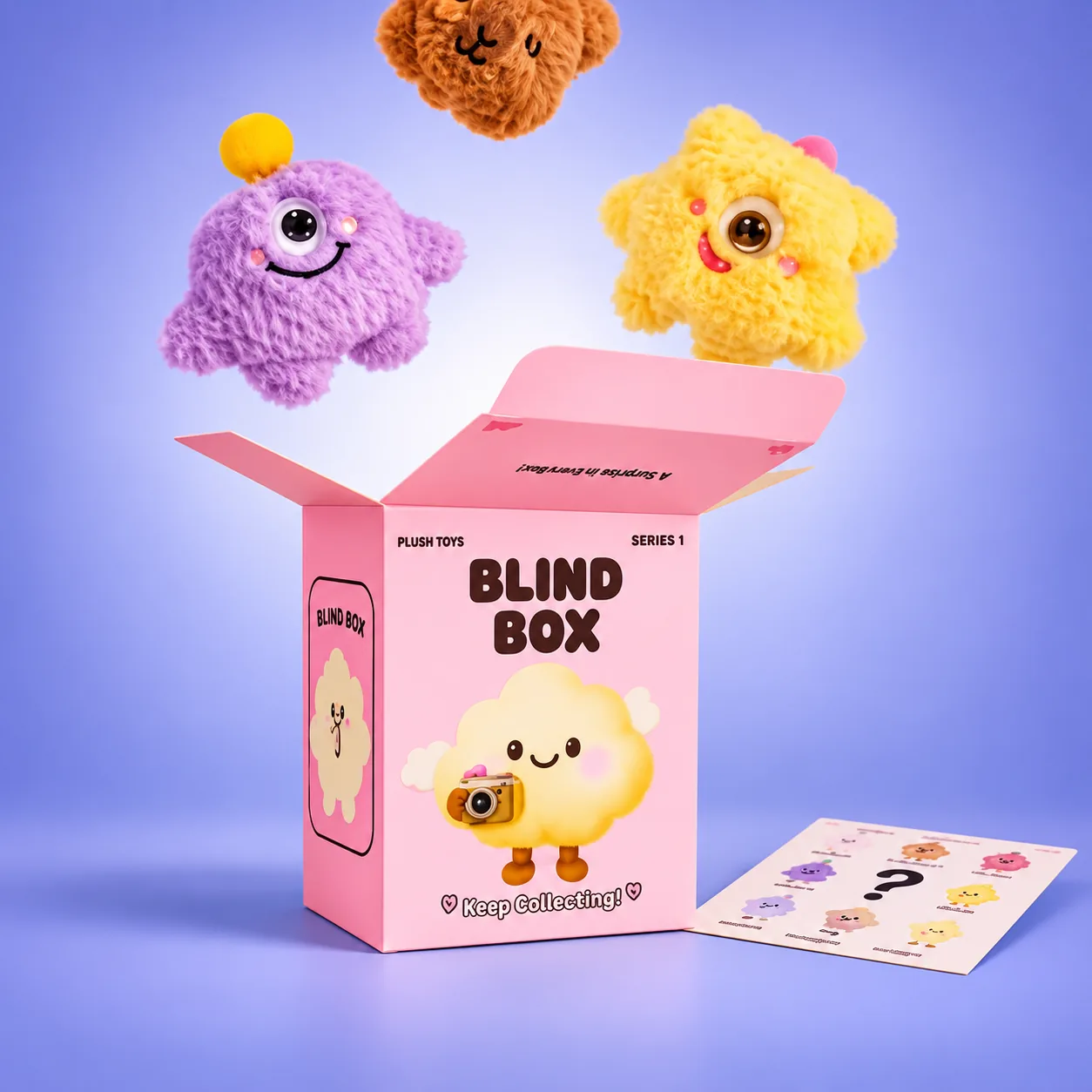
Custom tuck end box for plush toys that opens and closes again
Custom Tuck End Boxes for Plush Toys

Start your free estimate

A rough idea is plenty. We'll ask about anything we need.

PDF, PNG, JPG, GIF, WEBP, SVG, AI, EPS, PSD, ZIP, RAR, DOC, XLS. 20 MB max total.

    Included with every order

    • Free dieline with your order

      Your box template arrives drawn to your size, with bleed and fold lines marked, so your designer starts on the right shape.

    • Proof and 3D mockup, free

      See your design on the flat template and on a 3D box. Nothing goes to press until you approve it.

    • Made in 8 to 10 business days

      The clock starts when you approve your proof. Tell us your deadline up front and we'll plan the run around it.

    • Free shipping to five countries

      Delivered free to the United States, Canada, the United Kingdom, Australia and New Zealand. The price you approve is the price you pay.

    Built around what's inside

    Every box is cut and printed for your order, so any of these can change. Pick what suits your product and we'll quote it.

    Closes
    A tuck flap at each end, straight or reverse
    Arrives
    Flat and nested, ready to fold
    Best for
    Keepsakes and series shown at markets
    Size
    Your length, width and height
    Board
    18pt white board, Heavier board, Brown kraft
    Printed on
    Outside, Inside, Inside and outside
    Lamination
    Matte, Gloss
    Extra finishes
    Foil, Spot UV, Embossing, Debossing
    Closure
    Straight tuck end, Reverse tuck end, Seal end with tear-open zipper
    Design help
    Free dieline with every order, Free proof and 3D mockup

    Questions about Tuck End Blind Boxes

    A tuck end box is a folding carton that closes with a flap at each end, tucked into the box rather than taped. Because nothing is stuck down, it reopens without tearing anything. That makes it the reusable choice, good for anything people will open more than once.

    Pick a straight tuck end if the front is your showpiece: both flaps hinge from the back, so artwork can run edge to edge without a fold across it, and it's a touch faster to fold. Pick a reverse tuck end if the boxes travel a lot, since closing from opposite sides holds a little firmer.

    Yes. A whole series can look identical from outside, so no one can tell which design is in which box. The difference is that a tuck end box reopens, which suits a keepsake or a box you open to show the set. For a box that should open only once, seal end is the better fit.

    No, both styles cost the same. Price depends on size, board, quantity and finishes, not on how the box closes. You can ask for a quote before you've decided and settle on straight tuck, reverse tuck or seal end at proofing.

    Yes. Our free template generator draws straight and reverse tuck end dielines to your measurements, so you can start on artwork right away. A dieline drawn to your box size also comes free with every order.

    How tuck end boxes work

    A tuck end box is a printed folding carton with a closing flap at the top and the bottom. Each flap folds over and slides into the box, held in place without glue or tape, so the box can be opened and closed again as often as needed.

    Like every box we make, it starts as a flat sheet that's printed and cut, then shipped flat for you to fold. When you fold it, the sides form a sleeve and each end closes with its tuck flap. Nothing needs to stick, so the box goes together by hand in moments.

    The board is the same as on our other styles, 18pt white board as standard or a heavier grade for weightier products, and the box can be printed outside and in. Lamination and extra finishes work exactly as they do on any other carton, so choosing a tuck end never limits how the box looks. The same closure works on cube boxes too, if your product is closer to a square than a tall rectangle.

    What makes a tuck end box different is what happens next. It keeps working. The flap goes back in, the box closes neatly, and the product can live inside it for as long as the owner likes. For more on board, finishes and planning a series, see our page on blind box packaging.

    Straight tuck end vs reverse tuck end boxes

    Straight tuck end and reverse tuck end boxes differ in where the end flaps are attached. On a straight tuck end box, the top and bottom flaps both hinge from the back panel. On a reverse tuck end box, they hinge from opposite panels, so the top closes one way and the bottom the other.

    That small change affects the artwork. Because both flaps on a straight tuck end hang from the back, the front panel has no flap edge crossing it at either end. Designs that run edge to edge across the front, like a full illustration or a large logo, sit cleanly on a straight tuck end box.

    It also affects how the box holds up in transit. With the flaps closing from opposite sides, a reverse tuck end box holds a little firmer, which helps when boxes are shipped loose or handled often before they reach a shelf.

    Folding speed is the last difference. A straight tuck is slightly quicker to fold by hand, which adds up over a long packing session. You can switch between them right up to proofing.

    When a tuck end box is the better choice

    A tuck end box is the better choice when the box has a job after the first opening. If buyers will store the figure in it or reopen it to show a friend, a tuck end lets them do that without damaging the box.

    A seller at a market or convention may want one box they can open to show what a series looks like, then close again. A tuck end makes that easy, while the rest of the series can stay closed until each one is bought. The box can also double as a keepsake case for a figure that collectors want to keep with its original packaging.

    When the opening itself is the moment, seal end usually fits better, since its tear-open zipper works only once. Our seal end blind boxes page explains how that style works.

    Either way, the price is the same, so the decision comes down to how people will use the box rather than cost.

    Packing and shipping tuck end boxes

    Tuck end boxes arrive flat and nested, printed and ready to fold. Packing each one is three quick moves: fold it into shape, close the bottom flap, then add the product and tuck the top.

    Since the flaps simply tuck in, you can pack a few boxes, check them, and come back later without wasting any. That makes tuck end boxes forgiving for a first run, when you're still working out how long packing takes.

    If your boxes will be shipped on to stores or customers without much outer padding, a reverse tuck end is worth considering for the extra hold. For boxes that stay on your own shelf or table, either style does the job.

    Your order comes to you free of shipping costs in the United States, Canada, the United Kingdom, Australia and New Zealand. Other destinations are quoted case by case.

    Designing and ordering custom tuck end boxes

    Custom tuck end boxes are designed on a dieline drawn to your box size, with the tuck flaps shown so you can see where every panel and fold lands. Starting from the right dieline is the easiest way to keep text away from the folds.

    You can get one before you order. Our free template generator draws straight tuck and reverse tuck dielines to your measurements, and a dieline also comes free with every order.

    Don't forget the flaps. The tuck flap is the first thing a buyer touches when opening the box, so a small pattern or a short message there is a nice touch. Keep important text off the narrow tongue that slides into the box, because it disappears once closed. For color, file setup and print tips, see printed blind boxes.

    Before printing, you'll see a digital proof and a 3D mockup showing the box folded, flaps and all. Once you sign off, the run is ready in 8 to 10 business days. When you're ready, send your box size for a free estimate.