





Free shipping on every orderQuote within 24 hours
Custom Blind Boxes

Seal End Blind BoxesOpened with one pull of the zipper

Last updated

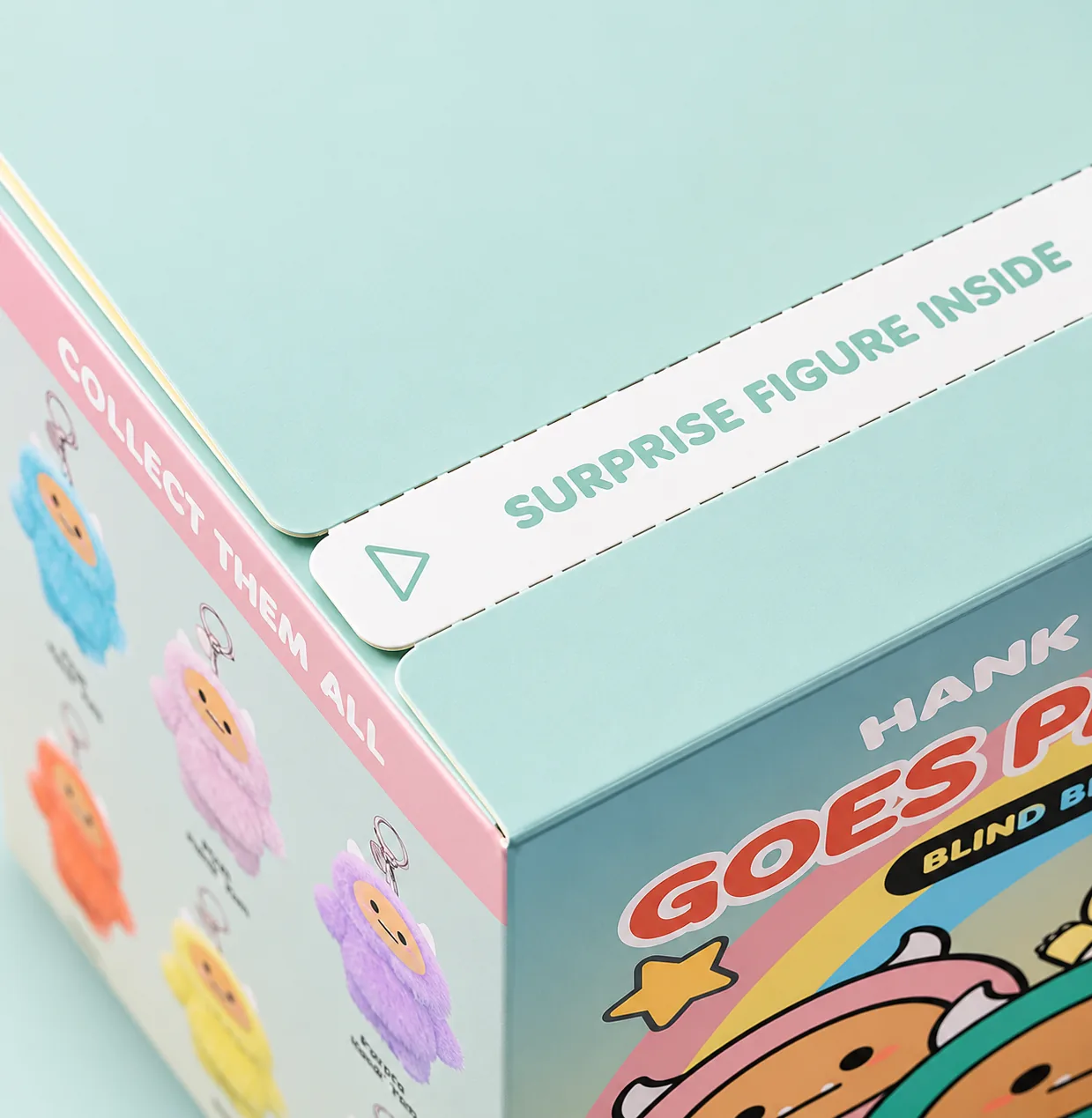
Seal end blind boxes are taped shut on the inside of the top and bottom flaps once they're packed, then opened by pulling a tear-open zipper across the top. Once that strip comes away, the box can't be closed again, and that one-time opening is why most blind box series use this style. It costs the same as a tuck end.

  • Tamper-evident zipper
  • Taped top and bottom

1 / 4

Seal end box with a tear-open zipper across the top
Seal End Box With a Tear-Open Zipper

Start your free estimate

A rough idea is plenty. We'll ask about anything we need.

PDF, PNG, JPG, GIF, WEBP, SVG, AI, EPS, PSD, ZIP, RAR, DOC, XLS. 20 MB max total.

    Included with every order

    • Free dieline with your order

      Your box template arrives drawn to your size, with bleed and fold lines marked, so your designer starts on the right shape.

    • Proof and 3D mockup, free

      See your design on the flat template and on a 3D box. Nothing goes to press until you approve it.

    • Made in 8 to 10 business days

      The clock starts when you approve your proof. Tell us your deadline up front and we'll plan the run around it.

    • Free shipping to five countries

      Delivered free to the United States, Canada, the United Kingdom, Australia and New Zealand. The price you approve is the price you pay.

    Built around what's inside

    Every box is cut and printed for your order, so any of these can change. Pick what suits your product and we'll quote it.

    Closes
    Pre-applied tape inside the flaps, opened along the zipper
    Arrives
    Flat and nested, zipper already in place
    Best for
    Series and reveals meant to open once
    Size
    Your length, width and height
    Board
    18pt white board, Heavier board, Brown kraft
    Printed on
    Outside, Inside, Inside and outside
    Lamination
    Matte, Gloss
    Extra finishes
    Foil, Spot UV, Embossing, Debossing
    Closure
    Straight tuck end, Reverse tuck end, Seal end with tear-open zipper
    Design help
    Free dieline with every order, Free proof and 3D mockup

    Questions about Seal End Blind Boxes

    A seal end box is a folding carton that's closed at both ends and stays shut once packed. On ours, double-sided tape inside the flaps holds it closed, and a tear-open zipper across the top opens it. The zipper is tamper-evident: once it's pulled, it can't be closed again, so you can tell at a glance if it has been opened.

    Choose seal end when the box should open once, with the zipper pull as the big moment. Choose tuck end when the box will be reopened, for storing the figure or showing the set at a market. Both cost the same, and you can settle the style at proofing.

    No. The tape sits on the inside of the flaps, so the outside stays clean for your artwork. Once the flaps are pressed shut, it holds the product securely in place until the box is opened.

    The zipper runs across the top panel, so plan the design with that strip in mind. Keep faces and logos off it, and use the top for a pattern or color that still looks good once it's torn. Your proof and 3D mockup show exactly where the strip falls before anything prints.

    No. The double-sided tape is applied during production, so it's already on every box when it arrives. On packing day, fold the box, peel off the adhesive backing and press it into shape. Then drop in your product and close the top.

    How seal end boxes work

    A seal end box is a folding carton that's closed at both the top and the bottom once it's packed, and opened by tearing a strip across the top. Nothing reopens it afterward. That one-way opening is the reason seal end boxes are the standard style for blind boxes.

    The box starts as a flat, printed sheet with creases already in place. Each end has a set of flaps that fold in over each other. On our seal end boxes, the bottom and top flaps carry double-sided tape applied during production, covered with a backing until you're ready to pack.

    The opening is built into the top panel. A tear-open zipper is cut into the board in a straight strip, so a single pull lifts it away and leaves a clean opening. The cut holds firm through packing and shipping, then gives way when someone pulls it.

    Once the strip is gone, it can't be put back, which makes the zipper tamper-evident: you can see at a glance whether a box's zipper has been opened. For a series sold in shops or at events, that's a simple way to keep track of stock that's still sealed at the top.

    The rest of the box works like any other carton. It can be printed inside and out, on 18pt white board as standard or a heavier board for weightier products. For more on board choices and how a series is planned, see our page on blind box packaging.

    What seal end boxes are used for

    Seal end boxes suit anything that should stay closed until the right person opens it. Blind box series are the obvious fit, but the same box works for small products sold sealed and for giveaways where the opening is part of the fun.

    Collectible figures and charms are the classic use. Every box in the series looks the same from outside, and the taped flaps keep the figure from shifting until the buyer pulls the zipper. Because each box opens only once, the reveal belongs to whoever buys it.

    Trading cards and pin or sticker sets work well too. They're light and flat, so a slim seal end box keeps them from sliding around, and the zipper makes opening a pack feel like an event rather than a chore.

    Event and promotional runs are another good match. A branded box handed out at a launch or a trade show gets opened on the spot, and the zipper gives everyone the same small moment at once. For personal occasions like reveals and anniversaries, the inside panel can carry the message people open the box for.

    Seal end vs tuck end boxes

    The difference between seal end and tuck end boxes is how they close and whether they open again. A seal end box is taped shut and opens once, along the zipper. A tuck end box closes with a flap that slides into the box, and it opens and closes as often as you like.

    Choose seal end when the opening is part of the product. Blind boxes and surprise reveals both rely on the box staying shut until the buyer decides to open it. The zipper pull gives that moment a clear start, and unlike a tuck end, there's no flap a shopper can simply lift open on the shelf.

    Choose tuck end when the box keeps working after it's opened. If the figure lives in the box between uses, or you open one at a market stall to show what the series looks like, a tuck end is easier to live with.

    Price isn't a factor in the choice. Both styles cost the same, and the style is settled at proofing, so you can request a quote before you've decided. Board and finishes work the same on either.

    Designing custom seal end boxes around the zipper

    Custom seal end boxes are designed like any printed carton, with one extra rule: the zipper strip runs across the top panel, so anything printed on it will be torn. Plan the top first and the rest of the box falls into place.

    Keep faces and logos off the strip. A pattern or a short line like "pull here" works well on the zipper, because it still looks right once torn. Some designs use the top panel to point to where the zipper starts, which makes the opening obvious to first-time buyers.

    Save something for the inside. The first thing a buyer sees after pulling the zipper is the inside of the box, and printing it turns that moment into a second surprise. A thank-you or a hidden message fits there nicely. For reveals and personal occasions, our personalized blind boxes page has ideas for what to print inside.

    Check it all on the proof. You'll get a digital proof and a 3D mockup showing exactly where the zipper falls against your artwork, before anything is printed. For file setup, color and print tips, see printed blind boxes.

    Packing seal end boxes

    Seal end boxes arrive flat and nested, with the tape already on, so packing comes down to the few steps in the tape question above.

    It goes quickest in batches. Fold and seal the bottoms of a stack first, then fill them, then close the tops. Working in rounds keeps the backing strips in one pile and the boxes moving, which helps on a big packing day.

    Once closed, the box stays shut through shipping and handling until someone tears the zipper. Delivery costs nothing to the US, Canada, the UK, Australia and New Zealand, and production takes 8 to 10 business days once you approve your proof.

    Ready to start? You can leave the style open and Send your box size for a free estimate and settle on seal end at proofing.